

-
 Mail Usadmin1@hanghongtrade.com
 -
 Call Us+8613313271100
 -
Apr . 16, 2026 02:05 Back to list
High Quality China Wall Flange Guide for Industrial Piping
The Ultimate Guide to Choosing a High-Quality China Wall Flange
In the world of industrial piping and architectural installations, the integrity of a connection can determine the success of an entire project. A premium china wall flange provides the essential stability and sealing required to transition piping through walls or floors. Whether you are dealing with heavy-duty industrial plumbing or high-end commercial infrastructure, selecting a flange that meets international standards is non-negotiable. This guide explores the technical nuances, material benefits, and selection criteria to help you secure the most reliable components for your next installation.
Material Excellence in China Wall Flange Manufacturing
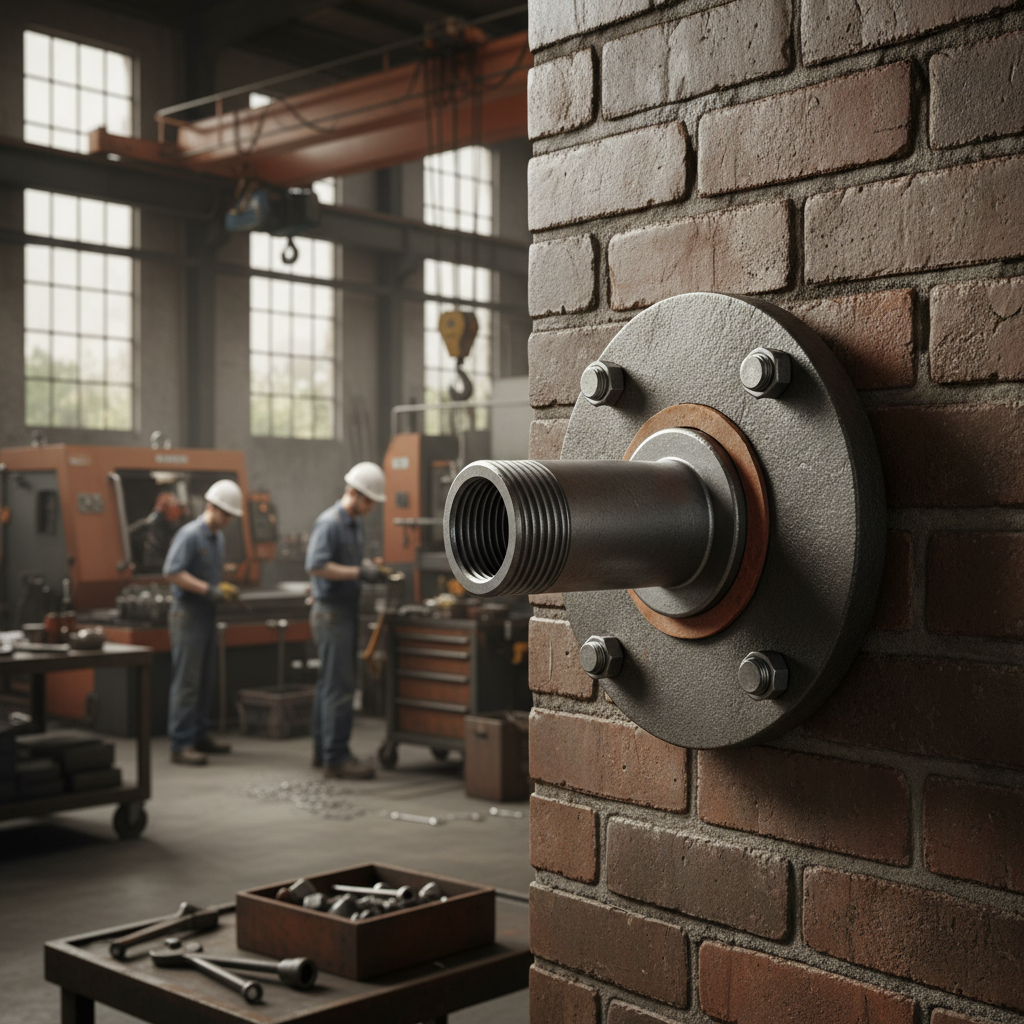
The durability of a china wall flange is primarily dictated by its material composition. Most high-grade flanges are crafted from stainless steel (304 or 316L), carbon steel, or specialized alloys to resist corrosion and withstand high pressure. Stainless steel is preferred for environments exposed to moisture or chemicals, while carbon steel offers exceptional strength for structural applications. Modern manufacturing processes in China have integrated advanced forging and precision machining to ensure that every flange provides a leak-proof seal and maintains structural integrity under extreme thermal expansion.
Pro Tip: Always verify the grade of the metal. For saltwater or highly acidic environments, 316L stainless steel is the gold standard due to its molybdenum content, which prevents pitting corrosion.
Key Applications of the China Wall Flange
The versatility of the china wall flange allows it to be used across multiple sectors. In commercial construction, they are used to create clean, professional transitions for HVAC and plumbing systems. In industrial plants, these flanges act as critical anchor points for high-pressure steam or chemical transport lines. Additionally, they are frequently used in water treatment facilities where reliability and ease of maintenance are paramount. The ability to quickly disassemble and reassemble a piping system using a flanged connection makes it an indispensable tool for engineers worldwide.
Technical Specifications: China Wall Flange Standards
To ensure global compatibility, a professional china wall flange must adhere to recognized standards such as ANSI, DIN, or JIS. These standards dictate the bolt circle diameter, the number of holes, and the thickness of the flange. Selecting the wrong standard can lead to misalignment and potential system failure. Below is a detailed specification table for common industrial wall flange configurations.
Comparing China Wall Flange vs. Standard Pipe Fittings
When designing a system, engineers often debate between using a dedicated china wall flange and standard threaded fittings. Wall flanges provide a rigid, flat mounting surface that prevents the pipe from vibrating or shifting within the wall cavity. In contrast, threaded fittings can be prone to leaks over time due to thermal cycling and lack the structural support provided by a flange plate. For any installation where the pipe must be permanently anchored to a concrete or steel wall, the wall flange is the superior technical choice.
Installation Best Practices for Wall Flanges
Proper installation is critical to prevent leaks and structural failure. First, ensure the wall surface is perfectly level before positioning the china wall flange. Use high-quality gaskets (such as EPDM or PTFE) between the flange and the wall to create a watertight seal. Tighten the bolts in a star pattern to ensure even pressure distribution across the face of the flange. Over-tightening can warp the flange, while under-tightening leads to seepage. Regular inspections and the use of anti-corrosive bolt coatings are recommended for long-term reliability.
Quality Control in China's Flange Export Industry
The global demand for high-precision components has pushed manufacturers of the china wall flange to adopt rigorous quality control (QC) measures. Modern factories now utilize CNC machining and automated ultrasonic testing to detect internal flaws in the metal. Furthermore, spectrometer analysis ensures that the alloy composition matches the requested grade perfectly. By sourcing from suppliers who provide Material Test Reports (MTR), buyers can be confident that their components will withstand the operational pressures of their specific industry.
Conclusion: Enhancing Infrastructure with Precision Flanges
Choosing a high-quality china wall flange is an investment in the safety and longevity of your piping system. From material selection and adherence to international standards to precision installation, every detail matters. By prioritizing durable materials like 316L stainless steel and ensuring rigorous quality checks, you can eliminate the risk of costly leaks and downtime. Whether for industrial or commercial use, the right wall flange ensures a seamless transition and a rock-solid foundation for your infrastructure.
Frequently Asked Questions (FAQs)
What is the main advantage of using a wall flange over a standard pipe clamp?
The main advantage of a wall flange is the level of structural support and sealing it provides. While a pipe clamp merely holds a pipe in place, a wall flange creates a flat, bolted connection that distributes the load across a larger surface area. This prevents the pipe from vibrating or shifting, which is critical in high-pressure systems. Additionally, wall flanges allow for the integration of gaskets, ensuring a completely watertight or airtight seal between the pipe and the wall, which clamps cannot achieve.
How do I choose between 304 and 316L stainless steel for my flange?
The choice depends on the environment. 304 stainless steel is excellent for general-purpose use, such as indoor plumbing or food-grade applications where exposure to harsh chemicals is minimal. However, if your project is located near the coast, in a chemical plant, or handles saline water, 316L is the necessary choice. The addition of molybdenum in 316L provides superior resistance to chlorides and pitting corrosion, making it the standard for marine and pharmaceutical industries.
Can I use a China wall flange for high-temperature steam lines?
Yes, as long as the material and pressure rating are correctly specified. For high-temperature steam, carbon steel or specific stainless steel alloys are used because they can withstand thermal expansion without warping. It is vital to use a high-temperature gasket (like graphite) and ensure the flange meets the PN or ANSI pressure class required for your steam system. Always consult the Material Test Report (MTR) to confirm the temperature limits of the specific alloy used in your flange.
What should I check when receiving a bulk order of flanges?
When receiving a bulk order, first verify the dimensional accuracy using a caliper to ensure it matches the ANSI/DIN standard. Check for surface defects such as scratches, pits, or burrs on the sealing face, as these can cause leaks. Most importantly, cross-reference the heat number stamped on the flange with the provided Material Test Report (MTR) to ensure the alloy composition is correct. For larger projects, performing a random dye penetrant test can help identify any microscopic surface cracks that might have occurred during forging.
-
High Quality China Wall Flange Guide for Industrial Piping
NewsApr.16,2026
-
Guide to Choosing the Best Industrial China Pipe Key Clamp
NewsApr.09,2026
-
China Cast Iron Pipe 1'' Floor Flange Global Trade and Sourcing Guide
NewsApr.07,2026
-
Comprehensive Guide to China Black Iron Pipe Applications and Manufacturing
NewsApr.04,2026
-
Comprehensive Guide to China Metal Flanges Types and Reliable Sourcing
NewsMar.31,2026
-
China Cast Pipe Fitting Nipple Guide For Industrial Plumbing Systems
NewsMar.28,2026



 Afrikaans
 Albanian
 Amharic
 Arabic
 Armenian
 Azerbaijani
 Basque
 Belarusian
 Bengali
 Bosnian
 Bulgarian
 Catalan
 Cebuano
 Corsican
 Croatian
 Czech
Czech
 Danish
 Dutch
Dutch
 Esperanto
 Estonian
 Finnish
 French
 Frisian
 Galician
 Georgian
 German
 Greek
Greek
 Gujarati
 Haitian Creole
 Hausa
Hausa
 Hawaiian
 Hebrew
 Hindi
Hindi
 Miao
Miao
 Hungarian
 Icelandic
 Igbo
Igbo
 Indonesian
 Irish
Irish
 Italian
 Japanese
 Javanese
 Kannada
 Kazakh
 Khmer
Khmer
 Rwandese
 Korean
 Kurdish
 Kyrgyz
 Lao
Lao
 Latin
Latin
 Latvian
 Lithuanian
 Luxembourgish
 Macedonian
 Malgashi
 Malay
Malay
 Malayalam
 Maltese
 Maori
Maori
 Marathi
 Mongolian
 Myanmar
 Nepali
 Norwegian
 Norwegian
 Occitan
 Pashto
 Persian
 Polish
 Portuguese
 Punjabi
 Romanian
 Russian
 Samoan
 Scottish Gaelic
 Serbian
 Sesotho
 Shona
Shona
 Sindhi
 Sinhala
 Slovak
 Slovenian
 Somali
 Spanish
 Sundanese
 Swahili
 Swedish
 Tagalog
 Tajik
Tajik
 Tamil
Tamil
 Tatar
Tatar
 Telugu
 Thai
Thai
 Turkish
 Turkmen
 Ukrainian
 Urdu
Urdu
 Uighur
 Uzbek
Uzbek
 Vietnamese
 Welsh
Welsh
 Bantu
Bantu
 Yiddish
 Yoruba
 Zulu
Zulu
 English