

-
 Mail Usadmin1@hanghongtrade.com
 -
 Call Us+8613313271100
 -
Mar . 31, 2026 02:05 Back to list
Comprehensive Guide to China Metal Flanges Types and Reliable Sourcing
China Metal Flange: A Comprehensive Guide for Global Trade
Metal flanges are essential components in piping systems, connecting pipes, valves, and pumps to facilitate fluid or gas transport. Sourcing high-quality flanges from China metal flange manufacturers has become increasingly popular due to competitive pricing and expanding production capabilities. This article provides a detailed overview of China metal flanges, covering types, materials, applications, and important considerations for international procurement. Understanding the nuances of sourcing from China can significantly improve your supply chain efficiency and product quality. We aim to equip you with the knowledge needed to make informed decisions when selecting a flange supplier.
Understanding Different Types of Metal Flanges
Metal flanges come in various types, each designed for specific applications. Some of the most common include weld neck flanges, slip-on flanges, blind flanges, threaded flanges, and lap joint flanges. Weld neck flanges offer high strength and are suitable for high-pressure systems. Slip-on flanges are easier to install but have lower strength. Blind flanges are used to seal the end of a pipeline. Threaded flanges are used for smaller pipe sizes and low-pressure applications. Lap joint flanges are frequently used with stub end connections, offering easy alignment and reduced stress. The choice of flange type depends on factors like pressure rating, temperature, fluid type, and installation requirements.
Key Takeaway: Selecting the right flange type is crucial for ensuring the integrity and safety of your piping system. Consult with engineering professionals to determine the best option for your specific needs.
Common Materials Used in China Metal Flanges
A wide range of materials are used in the manufacture of metal flanges, including carbon steel, stainless steel (304, 316, etc.), alloy steel, and cast iron. Carbon steel flanges are cost-effective and suitable for general-purpose applications. Stainless steel flanges offer excellent corrosion resistance and are ideal for aggressive environments. Alloy steel flanges provide high strength and are used in high-temperature and high-pressure applications. Cast iron flanges are used for low-pressure systems and are known for their durability. The material selection should be based on the fluid being transported, the operating temperature, and the potential for corrosion. Sourcing the right material is vital for longevity and safety.
Material Selection Guidelines:
• Carbon Steel: General-purpose, cost-effective
• Stainless Steel: Corrosion resistance, hygienic applications
• Alloy Steel: High-temperature, high-pressure applications
• Cast Iron: Low-pressure systems, durability
China Metal Flange Applications Across Industries
Metal flanges find widespread application across numerous industries. In the oil and gas sector, they are crucial for connecting pipelines and equipment. The chemical processing industry relies on corrosion-resistant flanges to handle harsh chemicals. Power generation plants utilize high-pressure flanges for steam systems. Water treatment facilities employ flanges to manage water flow and distribution. The food and beverage industry requires sanitary flanges for hygienic processing. The versatility of metal flanges makes them indispensable components in a wide array of industrial applications.
Sourcing China Metal Flanges: Key Considerations
When sourcing China metal flange, several factors are crucial. Quality control is paramount; ensure the manufacturer has robust quality assurance processes and certifications (e.g., ISO 9001). Pricing should be competitive, but avoid solely focusing on the lowest price, as this can compromise quality. Lead times are important to consider to avoid supply chain disruptions. Communication with the supplier should be clear and efficient. Finally, compliance with international standards (e.g., ASME, DIN, JIS) is essential.
Product Specifications and Standards Compliance
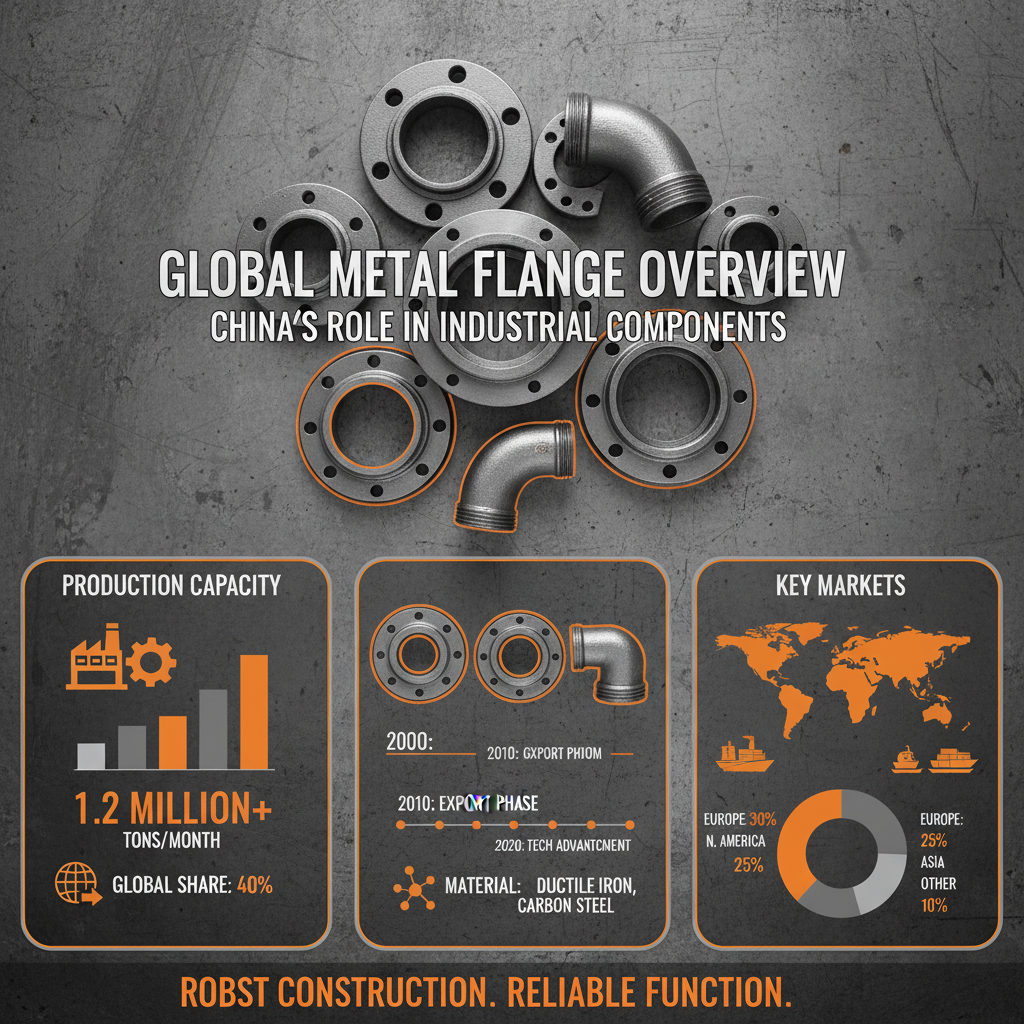
Ensuring your China metal flange meets necessary specifications and adheres to international standards is vital for safety and performance. Commonly referenced standards include ASME B16.5 (for flanges and flanged fittings) and EN 1092-1 (for flanges and their joints). Pay close attention to pressure ratings, dimensions, and material certifications. Verification by third-party inspection agencies is recommended. The following table outlines typical specifications:
Conclusion: Strategic Sourcing of China Metal Flanges
Sourcing China metal flanges offers significant advantages in terms of cost and availability. However, success requires careful planning, diligent quality control, and strong communication with your supplier. By prioritizing these aspects and understanding the critical considerations outlined in this guide, you can establish a reliable and efficient supply chain for your metal flange needs.
Frequently Asked Questions (FAQs)
What are the typical lead times for ordering metal flanges from China?
Lead times can vary significantly depending on the complexity of the order, the quantity required, and the supplier's production schedule. Generally, standard flanges in common materials may have a lead time of 2-4 weeks. Custom-designed flanges or those requiring specialized materials can take 6-12 weeks or longer. It’s essential to confirm lead times with the supplier upfront and factor them into your project planning. Clear communication regarding deadlines and expedited shipping options can help minimize delays.
How can I ensure the quality of metal flanges sourced from China?
Quality assurance is crucial. Request material certificates (e.g., MTC) for each batch, verifying the material composition. Conduct thorough inspections, either in-house or through a third-party inspection agency, to check for dimensional accuracy, surface defects, and adherence to specified standards. Choose suppliers with ISO 9001 certification and a proven track record of quality control. Consider performing non-destructive testing (NDT) methods, such as radiography or ultrasonic testing, for critical applications.
What are the typical Incoterms used for shipping metal flanges from China?
Common Incoterms used include FOB (Free on Board), CIF (Cost, Insurance, and Freight), and EXW (Ex Works). FOB is often preferred as it gives the buyer more control over the shipping process. CIF requires the seller to arrange and pay for insurance and freight to the destination port. EXW places all responsibility for shipping on the buyer. Understanding the implications of each Incoterm is vital for accurate cost calculations and risk management.
Are there any import duties or taxes associated with importing metal flanges from China?
Yes, import duties and taxes will apply depending on your country of import and the Harmonized System (HS) code for metal flanges. These can include tariffs, VAT (Value Added Tax), and other import-related charges. It’s important to check with your local customs authorities or a customs broker to determine the applicable duties and taxes. Factor these costs into your overall procurement budget.
-
High Quality China Wall Flange Guide for Industrial Piping
NewsApr.16,2026
-
Guide to Choosing the Best Industrial China Pipe Key Clamp
NewsApr.09,2026
-
China Cast Iron Pipe 1'' Floor Flange Global Trade and Sourcing Guide
NewsApr.07,2026
-
Comprehensive Guide to China Black Iron Pipe Applications and Manufacturing
NewsApr.04,2026
-
Comprehensive Guide to China Metal Flanges Types and Reliable Sourcing
NewsMar.31,2026
-
China Cast Pipe Fitting Nipple Guide For Industrial Plumbing Systems
NewsMar.28,2026



 Afrikaans
 Albanian
 Amharic
 Arabic
 Armenian
 Azerbaijani
 Basque
 Belarusian
 Bengali
 Bosnian
 Bulgarian
 Catalan
 Cebuano
 Corsican
 Croatian
 Czech
Czech
 Danish
 Dutch
Dutch
 Esperanto
 Estonian
 Finnish
 French
 Frisian
 Galician
 Georgian
 German
 Greek
Greek
 Gujarati
 Haitian Creole
 Hausa
Hausa
 Hawaiian
 Hebrew
 Hindi
Hindi
 Miao
Miao
 Hungarian
 Icelandic
 Igbo
Igbo
 Indonesian
 Irish
Irish
 Italian
 Japanese
 Javanese
 Kannada
 Kazakh
 Khmer
Khmer
 Rwandese
 Korean
 Kurdish
 Kyrgyz
 Lao
Lao
 Latin
Latin
 Latvian
 Lithuanian
 Luxembourgish
 Macedonian
 Malgashi
 Malay
Malay
 Malayalam
 Maltese
 Maori
Maori
 Marathi
 Mongolian
 Myanmar
 Nepali
 Norwegian
 Norwegian
 Occitan
 Pashto
 Persian
 Polish
 Portuguese
 Punjabi
 Romanian
 Russian
 Samoan
 Scottish Gaelic
 Serbian
 Sesotho
 Shona
Shona
 Sindhi
 Sinhala
 Slovak
 Slovenian
 Somali
 Spanish
 Sundanese
 Swahili
 Swedish
 Tagalog
 Tajik
Tajik
 Tamil
Tamil
 Tatar
Tatar
 Telugu
 Thai
Thai
 Turkish
 Turkmen
 Ukrainian
 Urdu
Urdu
 Uighur
 Uzbek
Uzbek
 Vietnamese
 Welsh
Welsh
 Bantu
Bantu
 Yiddish
 Yoruba
 Zulu
Zulu
 English