

-
 Mail Usadmin1@hanghongtrade.com
 -
 Call Us+8613313271100
 -
Feb . 26, 2026 02:10 Back to list
Comprehensive Guide to China Double Female Pipe Coupling Selection and Application
Understanding China Double Female Pipe Coupling: A Comprehensive Guide
When sourcing plumbing components, understanding the specifications and applications of parts like the china double female pipe coupling is crucial for project success. These couplings play a vital role in connecting pipes, and choosing the right one impacts the longevity and reliability of your plumbing system. This article provides a detailed overview of these couplings, covering their features, materials, applications, and key considerations for buyers. Proper selection ensures efficient fluid transfer and minimizes potential leaks. Hhomedecor provides high quality pipe fittings.
What is a China Double Female Pipe Coupling?
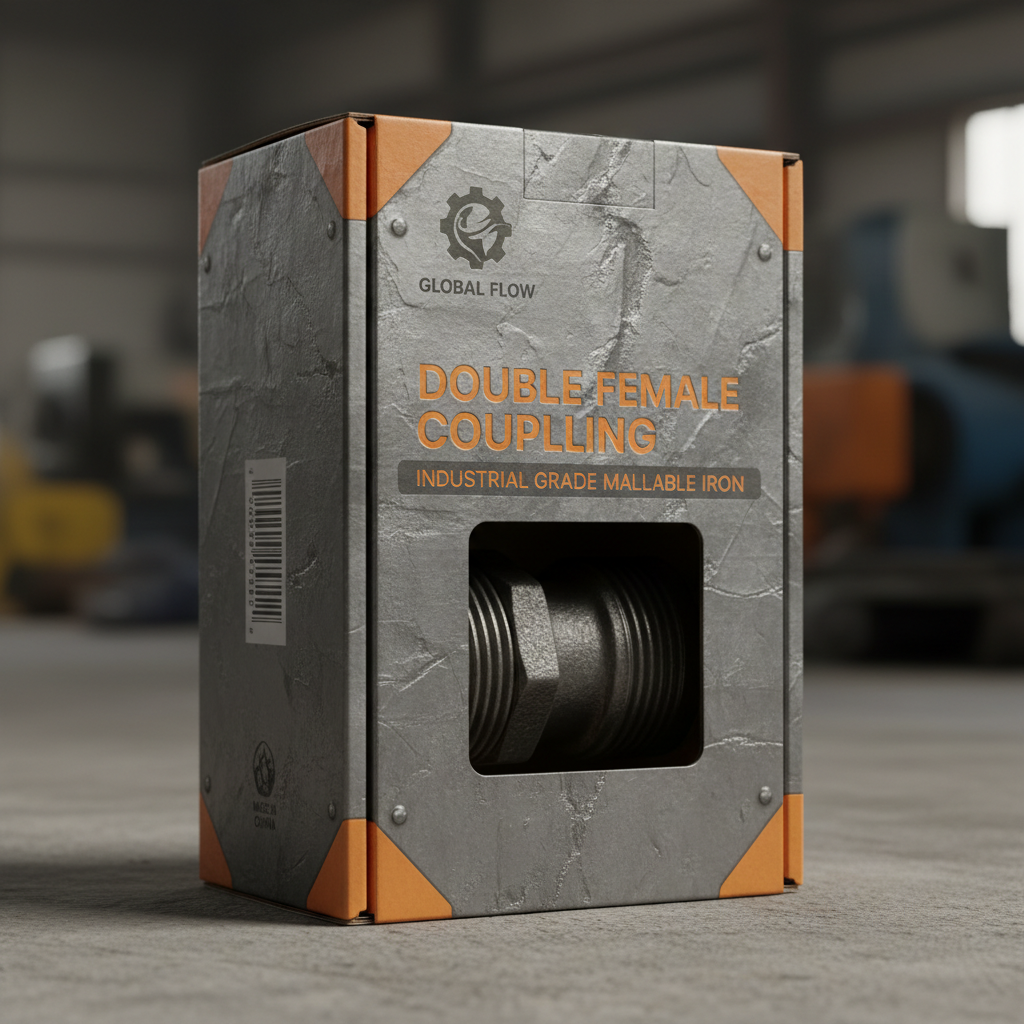
A china double female pipe coupling, as the name suggests, is a plumbing fitting featuring female threads on both ends. It's designed to connect two male-threaded pipes, allowing for easy assembly and disassembly. These couplings are commonly used in various applications, including water supply lines, irrigation systems, and gas lines (when appropriately certified for gas use). The term “china” simply indicates the country of origin and doesn’t necessarily reflect quality; many reputable manufacturers in China produce high-quality couplings meeting international standards. The key benefit of using a coupling is its ability to join pipes without the need for soldering or welding, making installation simpler and faster.
Key Benefits: Easy installation, quick assembly/disassembly, versatile for various piping systems, cost-effective solution.
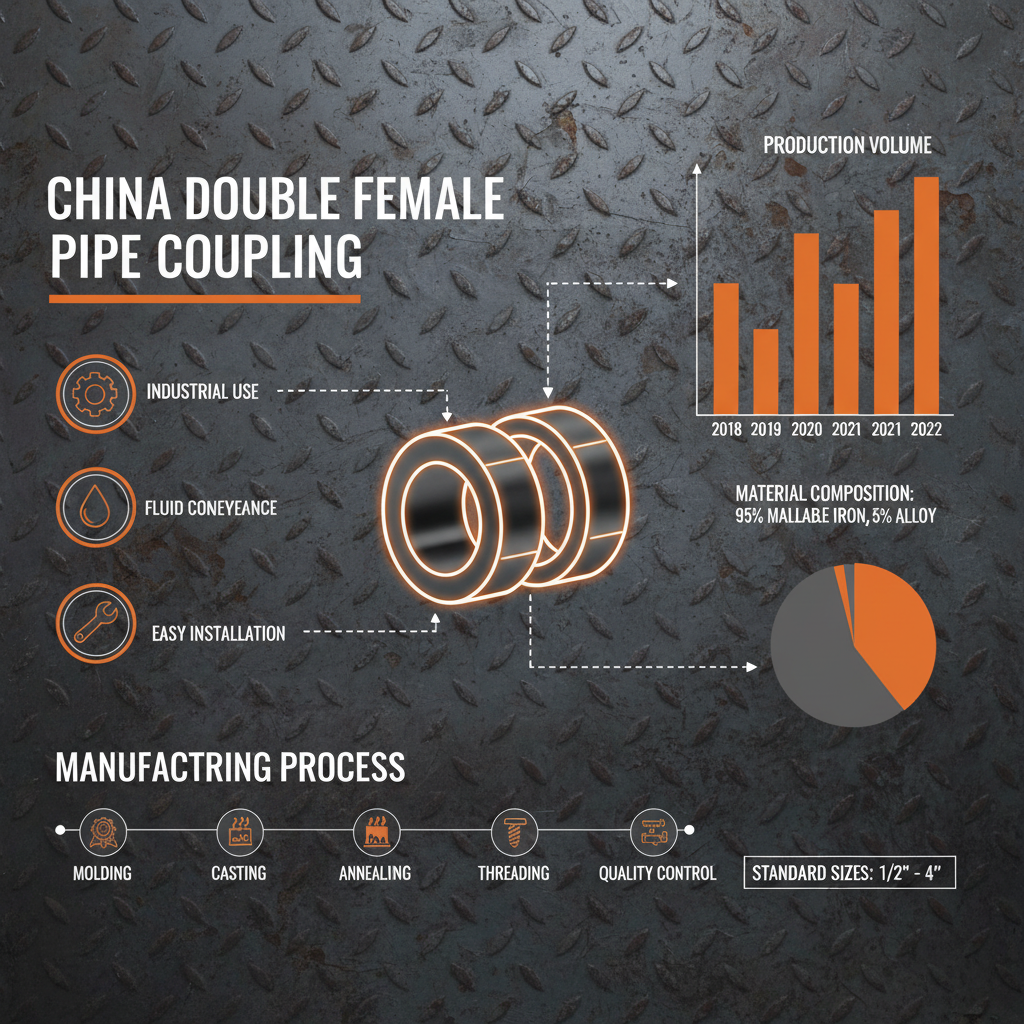
Materials Used in China Double Female Pipe Coupling Production
The materials used in manufacturing these couplings directly impact their durability, corrosion resistance, and suitability for specific applications. Common materials include:
- Brass: Offers excellent corrosion resistance and is suitable for potable water systems.
- Stainless Steel: Provides superior strength and corrosion resistance, ideal for harsh environments and high-pressure applications.
- Carbon Steel: A cost-effective option for non-corrosive applications, often coated to prevent rust.
- PVC (Polyvinyl Chloride): Lightweight and corrosion-resistant, suitable for low-pressure applications like irrigation.
- CPVC (Chlorinated Polyvinyl Chloride): Offers higher temperature resistance compared to PVC, suitable for hot water systems.
The choice of material depends on the fluid being transported, the operating temperature and pressure, and the environmental conditions.
Material Selection Guide:
• Potable Water: Brass, Stainless Steel, CPVC
• High Pressure: Stainless Steel, Carbon Steel
• Corrosive Environments: Stainless Steel, CPVC
• Low Pressure/Irrigation: PVC
China Double Female Pipe Coupling: Sizes and Specifications
These couplings come in a wide range of sizes to accommodate different pipe diameters. Common sizes include 1/2 inch, 3/4 inch, 1 inch, 1 1/4 inch, and 1 1/2 inch. It's crucial to match the coupling size precisely to the outer diameter of the male-threaded pipes being connected. Specifications to consider include thread type (NPT is common), pressure rating, and material composition. Here’s a sample specification table:
Applications of China Double Female Pipe Couplings
These couplings are incredibly versatile and find applications in numerous industries. Some key areas include:
- Residential Plumbing: Connecting water supply lines, sink drains, and toilet connections.
- Irrigation Systems: Joining sprinkler lines and connecting irrigation components.
- Industrial Piping: Connecting pipes in manufacturing plants and processing facilities.
- HVAC Systems: Joining refrigerant lines and connecting air conditioning components.
- Gas Lines: (With appropriately certified couplings) Connecting gas pipes for stoves, heaters, and other gas appliances.
Choosing the Right Supplier and Quality Control
When sourcing china double female pipe couplings, it's essential to partner with a reputable supplier who prioritizes quality control. Look for suppliers with certifications like ISO 9001, indicating adherence to international quality management standards. Inspect samples thoroughly before placing a large order, and verify that the couplings meet relevant industry standards and specifications. Hhomedecor emphasizes stringent quality assurance processes.
Conclusion: Selecting the Optimal Coupling for Your Needs
Choosing the right china double female pipe coupling requires careful consideration of material, size, specifications, and supplier reputation. By understanding these factors, you can ensure a reliable and long-lasting plumbing system. Investing in quality couplings upfront will save you time and money in the long run, preventing costly repairs and leaks.
Frequently Asked Questions (FAQs)
What is the difference between NPT and BSPT threads?
NPT (National Pipe Tapered) and BSPT (British Standard Pipe Tapered) are both tapered threads used for sealing pipes, but they are not interchangeable. NPT is a North American standard with a 60-degree angle, while BSPT is a European standard with a 55-degree angle. Attempting to connect NPT and BSPT threads can result in leaks and damage to the fittings. Always ensure compatibility before connecting pipes.
Can I use a pipe sealant with a double female coupling?
Yes, using a pipe sealant, such as Teflon tape or pipe dope, is highly recommended with double female couplings. Applying sealant to the male threads ensures a watertight seal and prevents leaks. Wrap the Teflon tape clockwise around the threads several times before connecting the pipes. For pipe dope, apply a thin, even coat to the threads.
What should I do if a coupling leaks after installation?
If a coupling leaks after installation, first try tightening it slightly. If tightening doesn't resolve the issue, disconnect the coupling, inspect the threads for damage, and reapply pipe sealant. Ensure the threads are clean and free of debris. If the leak persists, the coupling may be defective and should be replaced. Check that you’ve used the correct size coupling and compatible thread types.
Are there any safety precautions I should take when working with pipe couplings?
Always relieve pressure from the pipes before disconnecting any couplings. Wear appropriate safety glasses and gloves to protect your eyes and hands. Use the correct tools for tightening and loosening couplings to avoid damaging the threads. If working with gas lines, ensure the area is well-ventilated and follow all local safety regulations. Consult a qualified plumber if you are unsure about any aspect of the installation process.
-
High Quality China Wall Flange Guide for Industrial Piping
NewsApr.16,2026
-
Guide to Choosing the Best Industrial China Pipe Key Clamp
NewsApr.09,2026
-
China Cast Iron Pipe 1'' Floor Flange Global Trade and Sourcing Guide
NewsApr.07,2026
-
Comprehensive Guide to China Black Iron Pipe Applications and Manufacturing
NewsApr.04,2026
-
Comprehensive Guide to China Metal Flanges Types and Reliable Sourcing
NewsMar.31,2026
-
China Cast Pipe Fitting Nipple Guide For Industrial Plumbing Systems
NewsMar.28,2026



 Afrikaans
 Albanian
 Amharic
 Arabic
 Armenian
 Azerbaijani
 Basque
 Belarusian
 Bengali
 Bosnian
 Bulgarian
 Catalan
 Cebuano
 Corsican
 Croatian
 Czech
Czech
 Danish
 Dutch
Dutch
 Esperanto
 Estonian
 Finnish
 French
 Frisian
 Galician
 Georgian
 German
 Greek
Greek
 Gujarati
 Haitian Creole
 Hausa
Hausa
 Hawaiian
 Hebrew
 Hindi
Hindi
 Miao
Miao
 Hungarian
 Icelandic
 Igbo
Igbo
 Indonesian
 Irish
Irish
 Italian
 Japanese
 Javanese
 Kannada
 Kazakh
 Khmer
Khmer
 Rwandese
 Korean
 Kurdish
 Kyrgyz
 Lao
Lao
 Latin
Latin
 Latvian
 Lithuanian
 Luxembourgish
 Macedonian
 Malgashi
 Malay
Malay
 Malayalam
 Maltese
 Maori
Maori
 Marathi
 Mongolian
 Myanmar
 Nepali
 Norwegian
 Norwegian
 Occitan
 Pashto
 Persian
 Polish
 Portuguese
 Punjabi
 Romanian
 Russian
 Samoan
 Scottish Gaelic
 Serbian
 Sesotho
 Shona
Shona
 Sindhi
 Sinhala
 Slovak
 Slovenian
 Somali
 Spanish
 Sundanese
 Swahili
 Swedish
 Tagalog
 Tajik
Tajik
 Tamil
Tamil
 Tatar
Tatar
 Telugu
 Thai
Thai
 Turkish
 Turkmen
 Ukrainian
 Urdu
Urdu
 Uighur
 Uzbek
Uzbek
 Vietnamese
 Welsh
Welsh
 Bantu
Bantu
 Yiddish
 Yoruba
 Zulu
Zulu
 English