
-
 Mail Usadmin1@hanghongtrade.com
-
 Call Us+8613313271100
-
When sourcing components for industrial piping or high-end furniture fabrication, the specific requirements for a wholesale black iron 3/4 fitting often center on the balance between structural rigidity and cost-efficiency. For professionals in the metal products manufacturing sector, selecting the right malleable iron components is not merely a procurement task but a critical engineering decision that affects the overall stability of the installation, whether it is a complex gas line or a custom industrial-style shelving unit.
The importance of these components lies in their ability to withstand significant pressure and mechanical stress while remaining relatively economical. In the context of 3/4”floor flange and black malleable iron fittings, the "black" finish refers to the lack of galvanization, which provides a raw, industrial aesthetic highly sought after in modern architectural furniture, while maintaining the necessary strength provided by cast iron. The interplay between thread standards and material density determines how these fittings perform in high-vibration or high-load environments.
Understanding the technical nuances of these fittings allows buyers to optimize their supply chain and ensure long-term durability. By analyzing the material specifications and manufacturing standards, this guide provides a professional framework for evaluating wholesale black iron 3/4 options, ensuring that the chosen components meet both the functional requirements of the project and the budget constraints of the operation.


Black malleable iron is produced through a specialized annealing process that transforms brittle cast iron into a more ductile material. This process is essential for 3/4" fittings because it allows the component to absorb impact and resist cracking under pressure, which is a common failure point in standard grey iron. The "black" designation indicates the fitting has not been galvanized, leaving the iron surface exposed but typically coated with a light oil to prevent immediate oxidation during shipping.
From a technical standpoint, these fittings must adhere to strict thread standards such as BS, ANSI, or DIN to ensure leak-proof connections. The 3/4" dimension is a standard industry size that balances flow capacity with structural footprint, making it an ideal choice for both small-bore industrial piping and structural furniture frames. When manufactured by experienced exporters like Hebei Hanghong Trading Co., Ltd., these fittings undergo rigorous quality control to meet ISO9001 and ISO14001 certifications.
The durability of a wholesale black iron 3/4 component depends heavily on the carbon content and the precision of the threading. In high-pressure environments (such as PN10 or PN16 ratings), the uniformity of the wall thickness is the primary factor preventing catastrophic failure. Any casting void or irregularity in the malleable iron matrix can create a stress concentrator, significantly reducing the lifespan of the fitting when subjected to thermal expansion or mechanical vibration.
The critical value of using high-grade malleable iron over standard cast iron is the elimination of brittleness; this ensures that floor flanges and nipples can be tightened securely without the risk of sudden fracture, which is paramount for safety in load-bearing furniture and gas installations.
Additionally, compatibility with other materials, such as stainless steel tees or galvanized pipes, requires a deep understanding of galvanic corrosion. While black iron is robust, it is susceptible to rust in high-humidity environments. Therefore, the selection of a fitting must be paired with a compatible sealing strategy—such as PTFE tape or pipe dope—to ensure the interface between the 3/4" thread and the pipe remains airtight and moisture-resistant over decades of use.
When comparing different fitting materials for structural use, the weight-to-strength ratio of black iron provides a distinct advantage for those seeking an "industrial" feel without sacrificing stability. In furniture pipe applications, the density of the iron provides a low center of gravity, which is essential for the stability of tall bookshelves or heavy-duty clothes hangers. This physical property makes it superior to aluminum alloys in contexts where mass is a stabilizing factor.
The operational value is further realized through the ease of installation. Threaded connections allow for rapid assembly and disassembly without the need for specialized welding equipment, reducing labor costs in large-scale commercial fit-outs. By leveraging standard dimensions and universal thread patterns, project managers can ensure that components are interchangeable and easily replaceable, minimizing downtime during maintenance cycles.
The versatility of 3/4" black iron fittings extends from the mechanical room to the living room. In industrial settings, these fittings are indispensable for air and water lines where extreme corrosion resistance is not the primary concern, but structural integrity is. The use of floor flanges allows for the secure mounting of vertical pipes to concrete or wooden bases, providing a rigid anchor point for industrial equipment or safety railings.
In the burgeoning field of industrial interior design, these components are repurposed as furniture legs and frames. Because the malleable iron is processed to be less brittle, it can support the weight of heavy marble or reclaimed wood tabletops without deformation. The retro style associated with the black finish is complemented by its actual functional strength, proving that the transition from industrial utility to residential luxury is supported by genuine material performance.
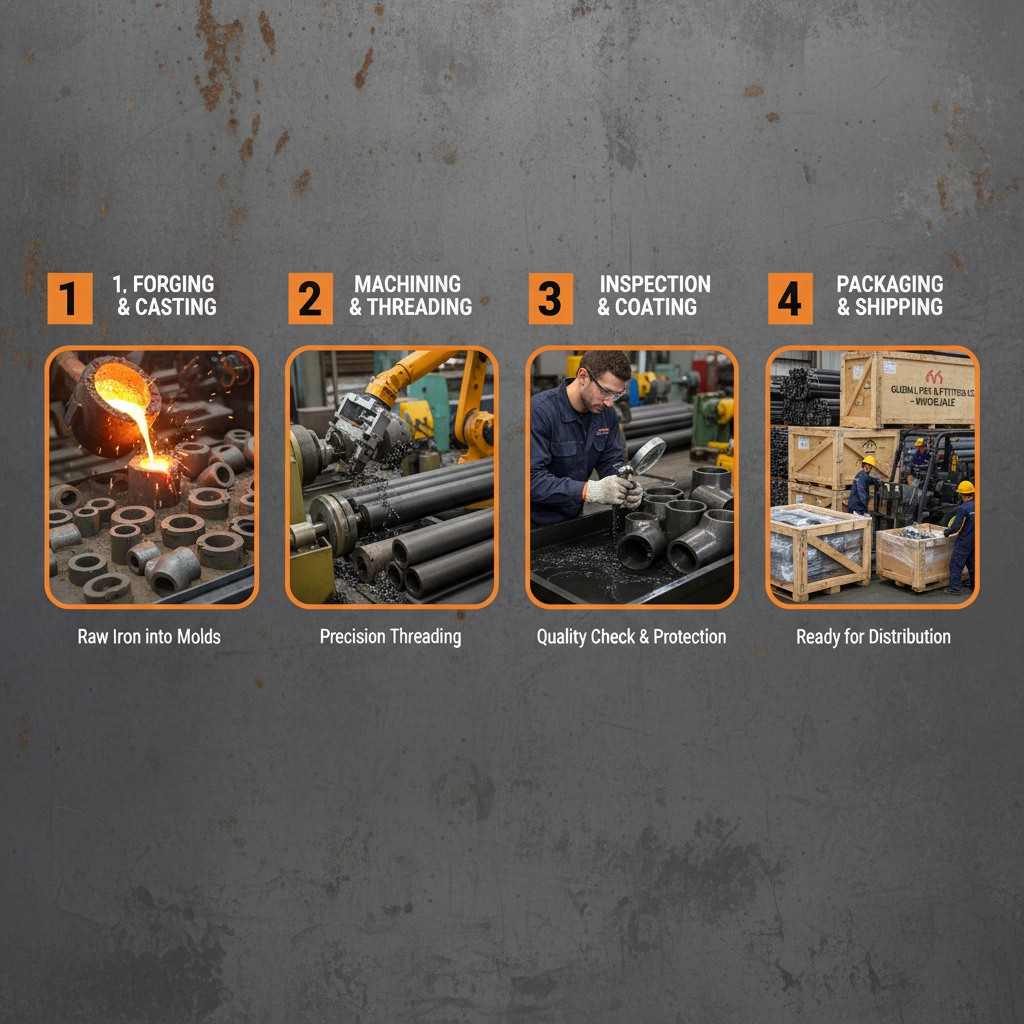
The manufacturing of pipe fittings has evolved from basic sand casting to high-precision automated lines. Modern facilities, such as those operated by Hebei Hanghong Trading Co., Ltd., utilize advanced molds and controlled cooling cycles to ensure that every 3/4" fitting possesses a consistent microstructure. This evolution has led to the widespread adoption of standards like ASME and GOST, which provide a global language for quality and safety.
Current trends suggest a shift toward tighter tolerances and better surface finishes. While the "raw" look remains popular, the underlying casting quality has improved, reducing the presence of slag and surface pits. This allows for a better fit between the fitting and the pipe, reducing the reliance on excessive sealant and improving the overall reliability of the joint under pressure.
Looking forward, the integration of environmental management systems like ISO14001 indicates a move toward more sustainable casting processes. The reduction of waste during the molding process and the implementation of more efficient heat treatment cycles not only lower the carbon footprint of production but also result in a more chemically stable final product that is less prone to premature oxidation.
The most frequent challenge when working with wholesale black iron 3/4 components is the management of surface rust and thread seizing. Because black iron is uncoated, exposure to moisture during storage can lead to the formation of iron oxide on the threads, making it difficult to achieve a tight seal. The solution involves the application of a light machine oil or a dedicated rust inhibitor prior to installation.
Another common issue is the over-tightening of fittings, which can lead to thread stripping or, in the case of lower-quality cast iron, cracking. The use of a calibrated torque wrench or following the "two-turn" rule after finger-tightening is recommended. For furniture applications, ensuring the floor flange is perfectly flush with the mounting surface is critical to prevent the resulting structure from wobbling under load.
Finally, integrating black iron with other metals requires careful consideration of the interface. Using a dielectric union or a specific sealant can prevent galvanic corrosion when connecting black iron to copper or stainless steel. By addressing these technical hurdles through proper preparation and standard-compliant installation, the lifespan of the system can be extended by several decades.
| Application | Material Choice | Priority Factor | Recommended Standard |
|---|---|---|---|
| Industrial Gas | Malleable Iron | Pressure Rating | ANSI/ASME |
| Modern Furniture | Black Iron | Aesthetic/Weight | BS Standard |
| Water Lines | Galvanized Iron | Corrosion Resistance | DIN/UNI |
| Chemical Piping | Stainless Steel | Chemical Stability | ISO/ASTM |
| Lightweight Frames | Aluminum Alloy | Weight Reduction | Custom/JIS |
| High-Heat Steam | Carbon Steel | Thermal Stability | ASME B16 |
The primary difference is the coating; black iron fittings are uncoated and treated with a light oil, while galvanized fittings are coated with a layer of zinc to prevent rust. Black iron is preferred for gas lines and industrial-style furniture due to its raw appearance and lower cost, whereas galvanized iron is used for water lines and outdoor applications where corrosion resistance is mandatory.
Yes, provided it is made from high-grade malleable iron. Malleable iron is specifically processed to resist cracking under load. When paired with a 3/4" pipe, the flange provides a wide base that distributes the weight of the table effectively across the floor surface, making it a standard choice for heavy-duty industrial furniture.
To prevent rust, you can apply a clear matte polyurethane spray or a wax-based sealant over the finished assembly. This preserves the industrial black look while creating a barrier against moisture and oxygen. For internal piping, ensuring the system is properly purged and sealed is the best way to prevent internal corrosion.
For most international projects, ANSI or BS standards are the most widely recognized and compatible. However, the choice should depend on the region of installation. In Europe, DIN or UNI standards may be more common. Always verify the thread pitch and diameter with your supplier to ensure a seamless fit with existing piping.
Black malleable iron fittings are suitable for many industrial applications, but for high-pressure steam, you must verify the PN (Pressure Nominal) rating. Ensure the fittings are rated for PN16 or higher and comply with ASME standards. For extremely high temperatures, carbon steel or stainless steel fittings are generally recommended over malleable iron.
The most effective method is using high-density PTFE (Teflon) tape or a professional-grade pipe joint compound (pipe dope). PTFE tape is ideal for most furniture and low-pressure applications, while pipe dope provides a superior seal for gas lines and high-vibration environments by filling the microscopic gaps in the thread peaks and valleys.
Selecting high-quality wholesale black iron 3/4 components requires a technical understanding of material properties, thread standards, and application-specific needs. From industrial gas lines to modern interior design, the durability and versatility of malleable iron provide a reliable foundation for both functional and aesthetic projects. By prioritizing certified manufacturing standards and proper installation techniques, users can ensure their systems remain stable, safe, and visually consistent over time.
For organizations seeking a dependable supply of high-grade pipe fittings and flanges, partnering with an experienced manufacturer is key to reducing procurement risk. We invite you to explore our comprehensive range of industrial solutions and technical specifications at www.hhomedecor.com to find the exact components required for your next project.

 Afrikaans
 Albanian
 Amharic
 Arabic
 Armenian
 Azerbaijani
 Basque
 Belarusian
 Bengali
 Bosnian
 Bulgarian
 Catalan
 Cebuano
 Corsican
 Croatian
 Czech
 Danish
 Dutch
 Esperanto
 Estonian
 Finnish
 French
 Frisian
 Galician
 Georgian
 German
 Greek
 Gujarati
 Haitian Creole
 Hausa
 Hawaiian
 Hebrew
 Hindi
 Miao
 Hungarian
 Icelandic
 Igbo
 Indonesian
 Irish
 Italian
 Japanese
 Javanese
 Kannada
 Kazakh
 Khmer
 Rwandese
 Korean
 Kurdish
 Kyrgyz
 Lao
 Latin
 Latvian
 Lithuanian
 Luxembourgish
 Macedonian
 Malgashi
 Malay
 Malayalam
 Maltese
 Maori
 Marathi
 Mongolian
 Myanmar
 Nepali
 Norwegian
 Norwegian
 Occitan
 Pashto
 Persian
 Polish
 Portuguese
 Punjabi
 Romanian
 Russian
 Samoan
 Scottish Gaelic
 Serbian
 Sesotho
 Shona
 Sindhi
 Sinhala
 Slovak
 Slovenian
 Somali
 Spanish
 Sundanese
 Swahili
 Swedish
 Tagalog
 Tajik
 Tamil
 Tatar
 Telugu
 Thai
 Turkish
 Turkmen
 Ukrainian
 Urdu
 Uighur
 Uzbek
 Vietnamese
 Welsh
 Bantu
 Yiddish
 Yoruba
 Zulu
 English