



High Quality Wholesale Retro Malleable Iron Pipe Fittings Guide
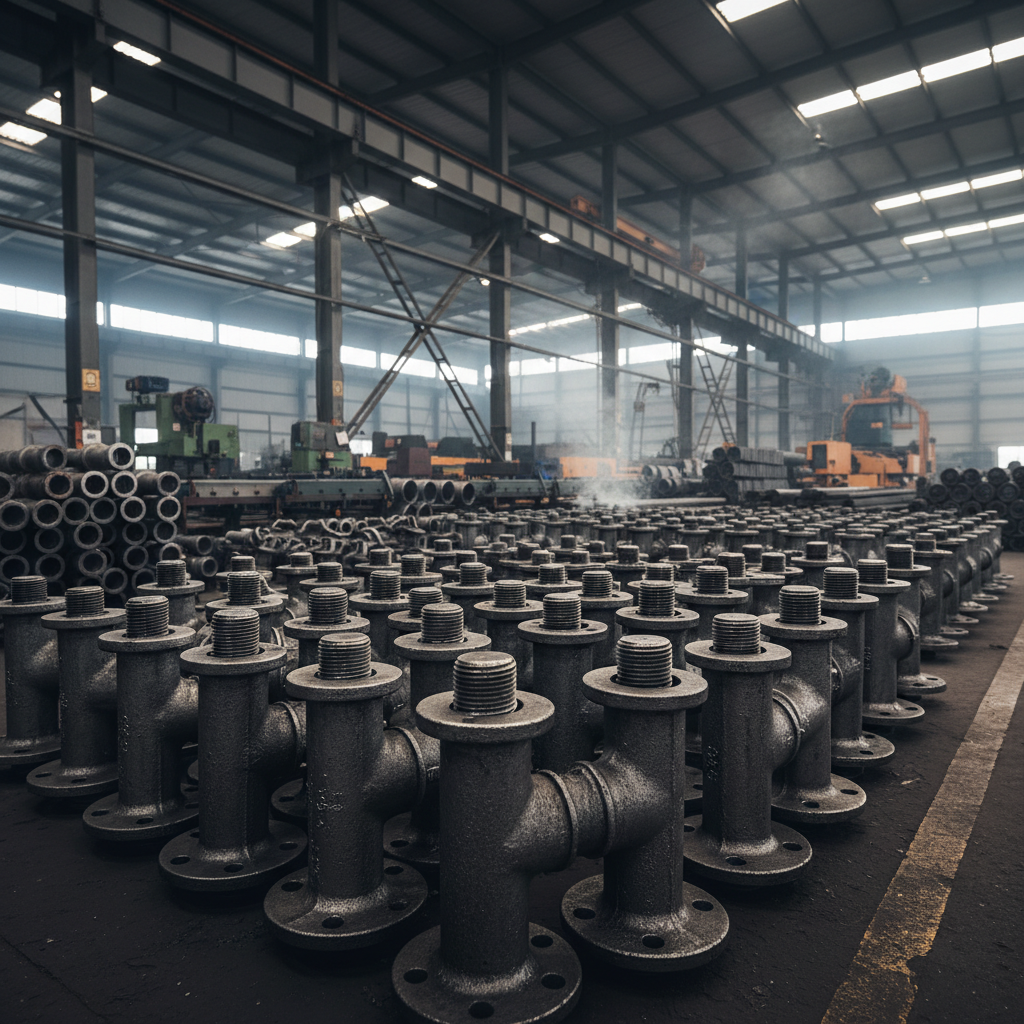
Industrial design and structural engineering often converge when selecting the right connectivity components for both utility and aesthetic purposes. For procurement managers and designers seeking high-strength, durable solutions, sourcing wholesale retro malleable iron pipe fittings provides a unique balance of vintage appeal and modern structural integrity. These components, typically characterized by their casting process and heat treatment, offer significantly higher ductility and impact resistance compared to standard gray iron alternatives.
Whether deployed in heavy-duty safety guardrails, complex industrial racking, or bespoke furniture frames, the performance of these fittings depends heavily on the material grade and surface treatment. By utilizing hot-dipped galvanization and adhering to ASME standards, manufacturers ensure that these connectors can withstand corrosive environments while maintaining the "industrial look" highly sought after in contemporary architectural projects. Understanding the technical nuances of these malleable iron components is essential for ensuring long-term stability and safety in any installation.

The Engineering Logic Behind Malleable Iron Casting and Heat Treatment
Malleable iron is produced through a specific annealing process that transforms white cast iron into a form that is less brittle. This process is critical for the production of industrial connectors, as it allows the material to be deformed without fracturing. In the context of wholesale retro malleable iron pipe fittings, this metallurgy ensures that the components can handle the mechanical stresses of tightening and vibration without the risk of sudden failure, a common issue with standard cast iron.
The manufacturing process typically involves casting the iron into the desired shape, followed by a rigorous heat treatment cycle. This results in a graphite structure that provides the material with its characteristic "malleability." For applications such as safety guardrails or industrial fencing, this property is non-negotiable. When these fittings are paired with hot-dipped galvanization, they gain a protective zinc layer that prevents oxidation, extending the service life of the pipeline or structure in humid or chemically active environments.
- Increased Ductility: Unlike gray iron, annealed malleable iron can withstand significant pressure and impact.
- Thread Precision: High-grade casting allows for tighter tolerances in female and male connections, reducing leakage in fluid transport.
- Structural Versatility: Suitable for everything from heavy-duty chemical plants to light-weight architectural furniture.

Practical Application Scenarios: From Safety Guardrails to Bespoke Furniture
The versatility of malleable iron components allows them to bridge the gap between heavy industrial utility and high-end interior design. In industrial settings, "kee clamps" and couplings are indispensable for creating modular safety systems. These systems must be rapidly deployable and easily adjustable, requiring fittings that can be secured firmly without the need for welding. The ability to create 90-degree turns, T-junctions, and floor-mounted flanges makes them ideal for warehouse racking and perimeter fencing.
Conversely, the "retro" appeal of these fittings has sparked a trend in furniture design. Designers leverage the rugged aesthetic of black or galvanized iron to create shelving units, clothing racks, and table frames. In these scenarios, the focus shifts from pressure ratings to visual consistency and structural stability. Because the materials are inherently strong, they support significant weights while providing a distinct architectural statement. This dual-market demand requires a supplier capable of maintaining strict quality control regardless of whether the end-use is a chemical plant or a luxury loft.
Procurement Considerations for Large-Scale Pipeline Connectivity
When sourcing connectivity components in bulk, procurement managers must look beyond the initial price point. The total cost of ownership is heavily influenced by the fitting's longevity and the ease of installation. One of the primary evaluation criteria should be the certification of the manufacturer. Adherence to ISO9001, CE, and API standards ensures that the casting process is consistent and that the chemical composition of the iron meets international safety requirements.
Another critical factor is the surface treatment. While black iron is suitable for indoor, dry environments, hot-dipped galvanization is essential for any outdoor or industrial application. This treatment involves immersing the part in molten zinc, creating a metallurgical bond that is far superior to simple spray-painting. Additionally, buyers should verify the compatibility of the fittings with the pipe standards being used (e.g., ASME or DIN) to avoid costly onsite modifications. Selecting a supplier with extensive OEM experience can also facilitate the development of custom shapes for specialized engineering challenges.
Material Performance and Application Matrix
| Material Grade | Surface Treatment | Primary Application | Corrosion Resistance |
|---|---|---|---|
| Malleable Iron | Hot Dipped Galvanized | Outdoor Safety Guardrails | High |
| Malleable Iron | Black Oxide/Oil | Indoor Retro Furniture | Low |
| Carbon Steel | Transparent Oil | High-Pressure Industrial | Medium |
| Stainless Steel | Mill Finish | Chemical/Food Processing | Very High |
| Aluminum Alloy | Anodized | Lightweight Frameworks | High |
Evaluating Manufacturing Quality and Supply Chain Reliability
The reliability of a pipe fitting is determined during the casting and machining phases. High-quality manufacturers utilize in-house inspection instruments to ensure that every piece meets the specified dimensions. For malleable iron, this includes checking for porosity in the casting and verifying the depth of the threads. A lack of precision in the threading can lead to joint failures, which in a high-pressure gas or oil line, could result in catastrophic accidents.
From a supply chain perspective, the ability to provide consistent lead times is paramount. For large-scale construction projects, a delay in receiving a few critical couplings can halt the entire installation process. This is why partnering with a manufacturer that has integrated production—from raw material sourcing to final galvanization—is advantageous. Such integration reduces the risk of third-party delays and ensures that quality control is maintained across every stage of production, from the initial mold to the final wooden case packaging.
Future Trends in Industrial Component Design and Sourcing
The industry is seeing a shift toward more sustainable manufacturing processes and a higher demand for hybrid material systems. We are observing a trend where malleable iron is being combined with high-strength aluminum alloys to reduce the overall weight of structural frames without sacrificing the "industrial" aesthetic. This is particularly prevalent in the modular construction sector, where ease of transport and assembly is a priority.
Furthermore, digital procurement is changing how buyers interact with suppliers. There is an increasing requirement for detailed technical documentation and 3D CAD models to be provided upfront, allowing engineers to simulate the stress loads on the fittings before they are even ordered. As standards evolve, the integration of smarter quality tracking—such as batch-specific QR codes for traceability—will become a standard requirement for those operating in the petroleum, chemical, and power generation sectors.
Frequently Asked Questions About Industrial Pipe Fittings
What is the difference between malleable iron and standard cast iron?
Malleable iron undergoes a specialized annealing heat treatment that removes the brittleness found in standard cast iron. This makes it much more resistant to impact and allows it to withstand higher mechanical stresses without cracking, which is why it is preferred for structural fittings.
Why is hot-dipped galvanization recommended for outdoor use?
Hot-dipped galvanization creates a thick, durable layer of zinc that bonds chemically to the iron. This provides a physical barrier against moisture and oxygen, preventing rust and corrosion in harsh weather or industrial environments.
Can these fittings be used for high-pressure gas lines?
Yes, provided they are manufactured to the correct standards (such as ASME or API) and have passed the necessary pressure tests. Always verify the specific pressure rating of the model you are purchasing to ensure it matches your application's requirements.
Are these components suitable for indoor furniture design?
Absolutely. The industrial aesthetic of black malleable iron is very popular for retro-style shelving and frames. For indoor use, black iron or oil-finished options are typically chosen for their visual appeal.
What should I check when evaluating a wholesale supplier?
Check for ISO9001 quality management certifications, API or CE certifications for safety, and their ability to provide consistent lead times. Requesting material test reports (MTRs) can also help verify the chemical composition of the iron.
How do I ensure a leak-proof connection with threaded fittings?
Ensure that the threads are clean and free of debris, and use a high-quality thread sealant or PTFE tape. Proper torque application is also essential to avoid over-tightening, which can stress the malleable iron and cause leaks.
Technical References and Industry Standards
- Overview of Pipe Fitting Engineering and Types
- ASME International Standards for Pressure Piping
- ISO 9001 Quality Management System Guidelines
- American Petroleum Institute (API) Certification Standards
Selecting the right connectivity components is a balance of technical specification and application logic. By prioritizing certified materials and appropriate surface treatments, you ensure that your project remains safe, durable, and visually consistent.
Related Articles




 English
 Afrikaans
 Albanian
 Amharic
 Arabic
 Armenian
 Azerbaijani
 Basque
 Belarusian
 Bengali
 Bosnian
 Bulgarian
 Catalan
 Cebuano
 Corsican
 Croatian
 Czech
 Danish
 Dutch
 Esperanto
 Estonian
 Finnish
 French
 Frisian
 Galician
 Georgian
 German
 Greek
 Gujarati
 Haitian Creole
 Hausa
 Hawaiian
 Hebrew
 Hindi
 Miao
 Hungarian
 Icelandic
 Igbo
 Indonesian
 Irish
 Italian
 Japanese
 Javanese
 Kannada
 Kazakh
 Khmer
 Rwandese
 Korean
 Kurdish
 Kyrgyz
 Lao
 Latin
 Latvian
 Lithuanian
 Luxembourgish
 Macedonian
 Malgashi
 Malay
 Malayalam
 Maltese
 Maori
 Marathi
 Mongolian
 Myanmar
 Nepali
 Norwegian
 Norwegian
 Occitan
 Pashto
 Persian
 Polish
 Portuguese
 Punjabi
 Romanian
 Russian
 Samoan
 Scottish Gaelic
 Serbian
 Sesotho
 Shona
 Sindhi
 Sinhala
 Slovak
 Slovenian
 Somali
 Spanish
 Sundanese
 Swahili
 Swedish
 Tagalog
 Tajik
 Tamil
 Tatar
 Telugu
 Thai
 Turkish
 Turkmen
 Ukrainian
 Urdu
 Uighur
 Uzbek
 Vietnamese
 Welsh
 Bantu
 Yiddish
 Yoruba
 Zulu